
Tuesday, September 29, 2020
Natural Gas Safety Awareness Program - Damage Awareness and Prevention
Before you let a single shovel hit the dirt, if you’re doing any digging at all, watch this short video so you can keep yourself -- and everyone around you -- safe when you dig.


Wednesday, September 23, 2020
Natural Gas Safety Awareness Program
Monday, September 14, 2020
Natural Gas Safety Awareness Program
Richmond Gas Works pipelines reliably and efficiently deliver natural gas to our customers each day. Through our natural gas safety awareness program, we ensure our customers are safe and secure.
Thursday, September 10, 2020



Monday, August 24, 2020
Safety Precautions You Need to Know
Water Heater Precautions
- Set your water heater to at least 120 degrees Fahrenheit to ensure that harmful bacteria will not form inside the water heater.
- Be aware that water heater temperatures above 120 degrees Fahrenheit can cause scalding, especially to young children and the elderly.
Carbon Monoxide Precautions
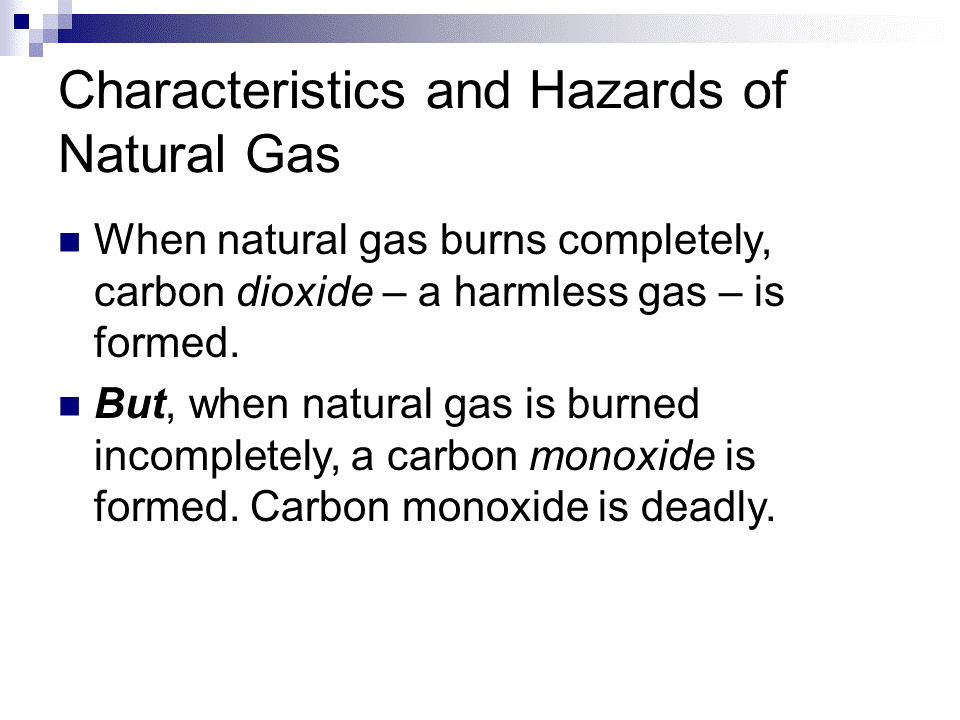
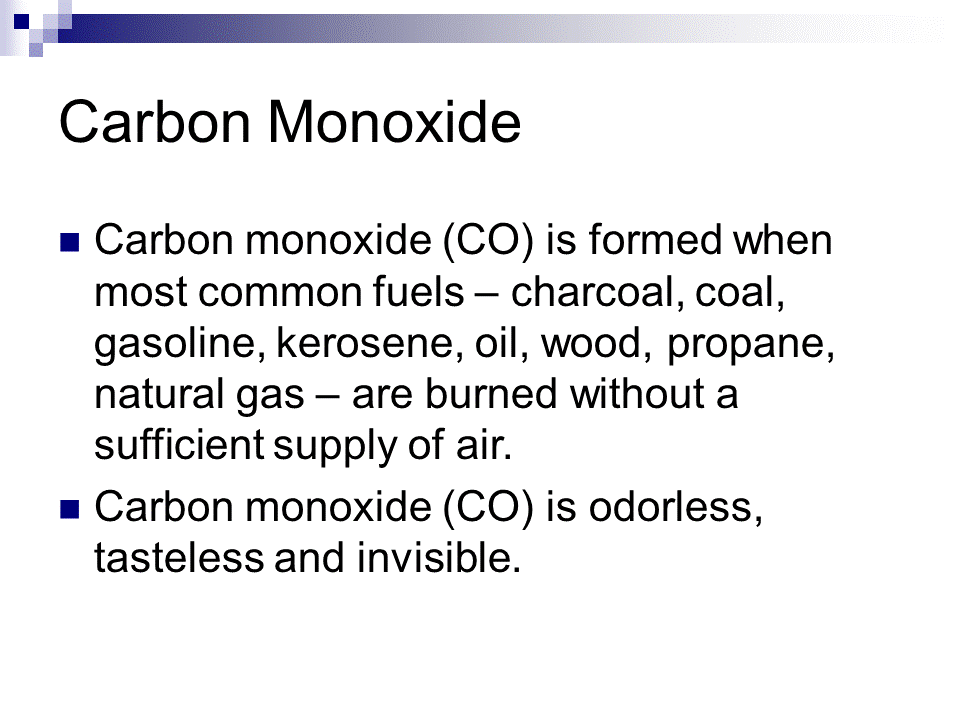
- Carbon Monoxide (CO) comes from poorly functioning appliances, or appliances that are not vented or incorrectly vented.
- You can’t see or smell CO. Only a CO detector can alert you to a problem.
- Health officials recommend having CO detectors on every level of your home and within 10 feet of any sleeping areas.
- CO poisoning symptoms can occur immediately or more gradually after long-term exposure. Symptoms are similar to the flu but do not include a fever. They include dizziness, shortness of breath, headaches, confusion, nausea, and fainting.
- If you suspect CO poisoning, get fresh air immediately. Be sure to call for help before helping others. CO poisoning can lead to brain damage or even death.
Flammable Materials
- Keep combustible and flammable materials (such as gasoline cans, cleaning solvents, rags and cloths) at least 18 inches away from your gas appliances.
Wednesday, August 19, 2020
Precautions To Take Around Natural Gas Meters
Precautions Around Natural Gas Meters
Inclement Weather Precautions
In the event of snow and ice:

- Do not scratch or damage the protective coating (paint) on the meter and piping.
- Do not bury any portion of the meter or its shutoff valve under dirt or mulch.
- The owner is responsible for the maintenance of any piping on the house side of the natural gas meter.
- Do not hang things or anchor laundry lines or plant supports to the gas meter or piping.
- Do not chain a pet, bicycle, gas grill or anything else to the gas meter or piping.
- Maintain a safe clearance between your outdoor grill and the gas meter.
- Maintain a two-foot clearance to allow access to the meter and meter shut-off valve.
- Call Richmond Gas Works for help with meter protection if the meter is located in an area where a car could strike it.
Inclement Weather Precautions
In the event of a flood:
- Shut off the natural gas supply valve to the appliance.
- If you are evacuating the premises, shut off your natural gas valve at the meter. Use a wrench to turn the valve a quarter turn so that it is crosswise (perpendicular) to the pipe.
- If you turn off the gas at the meter, do not turn it back on yourself. Call Richmond Gas Works to restore the gas service.
In the event of snow and ice:
- Use a broom, not a shovel, to keep your gas meter and regulator free from snow and ice.
- For sidewall vented appliances such as direct vent furnaces, fireplaces or hot water heaters, do not allow the outside vent to be blocked by snow and ice. Blocked vents can cause carbon monoxide to back up into the building.

Tuesday, August 18, 2020
Focusing on sustainability, safety and security with new LED streetlights
In 2020, the City of Richmond Department of
Public Utilities was converting 7,500 streetlight fixtures to LED
lighting, meeting sustainability, safety and security needs. Streetlights are
an important factor in public safety and quality of life, providing lighting
for both residential and commercial uses. Light-emitting diodes (LEDs) will
replace the present use of standard high pressure sodium vapor streetlights
following a successful pilot project which tested the newer technology. LED lights
are up to 80 percent more efficient than other lighting sources and use far less
energy, thus reducing greenhouse gas emissions.
“I am
proud that the streetlighting conversion project is moving forward. At a time
when environmental impacts of our actions are felt more than ever, this
project ties into the goals and road map laid out in my RVAgreen 2050
initiative,” said Mayor Levar Stoney.
 |
| Crews readying to convert fixture |
When the
city’s streetlights were first installed in 1845, they were powered by coal
gas. Over the years, as the lighting source technology changed, the city has
kept up with those changes in its streetlighting network. This LED conversion
of the 7,500 fixtures is occurring through 2022. The majority
of these replacements will take place along the roadways in the city’s
Southside.
The
existing fixtures use standard High Pressure Sodium Vapor (HPSV) lamps with a
warmer color temperature (yellow light). The new LED fixtures will have a
cooler color temperature (moonlight color), which will enhance visibility and
provide better color rendering. The LED fixtures will also provide better
efficiency, reliability and maintainability.
 |
| Old technology (l); new technology (r) |
The
projected useful life of LED lighting is 20 years per fixture, compared to
an average of five years for the current lighting technology used in the city.
Although the initial cost per fixture of the current lighting technology is
$240 compared to $440 for the LED fixtures, the increase in useful life per
fixture of the LED technology will result in a 54 percent cost savings for the city.
The cost savings will be realized by a reduced replacement rate for the LED
fixtures, an estimated 40 percent reduction in energy costs as well as reduced
maintenance costs.
The city
underwent a multi-faceted pilot project in 2018 testing and evaluating the technology
on existing infrastructure to determine its feasibility and needed upgrades.
The pilot focused on six areas and included the installation of three different
style fixtures to assess the new lighting technology. Those six areas were Richmond Highway, Brook Road, Forest Hill Avenue, New Kent Avenue,
Boston Avenue Alley and Wentbridge Road Alley. The pilot project resulted in a
design reference with specifications on acceptable lighting source parameters
and range of lumens output acceptable for both roadways and alleys as well as
proper electrical characteristics for the distribution grid.
Subscribe to:
Posts (Atom)